
Digital Transformation in Logistics: Off-the-Shelf Software or Custom Development
A study of current market trends in logistics services identified the following trends that describe digital transformation in two directions:
- minimizing manual processes: automation and the adoption of machine learning;
- building ecosystems: a single control center with all up-to-date information.
Both trends show how important it is to minimize human involvement in business processes and to reduce not only the time spent but also the number of errors. Bringing digital technologies into warehouse, inventory and order management, shipment monitoring and document workflow automation makes logistics operations more efficient, improves information security and customer loyalty, and keeps supplies stable.
In this article, we look at the types of systems used by logistics companies. We then compare off-the-shelf solutions with custom logistics management software.
Contents
- What are off-the-shelf solutions in transport logistics
- What is custom logistics software
- What to consider when choosing logistics management software
- Why off-the-shelf solutions don't always suit logistics and express freight delivery companies
- Which software is suitable for planning driver schedules and routes
- Which IT solutions help cut warehouse costs
- Which solution is suitable for fleet management
- Custom vs. off-the-shelf driver management software: a comparison
- Example: a multifunctional app for managing express delivery drivers
- How we develop mobile and web apps for logistics and express delivery companies
What Are Off-the-Shelf Solutions in Transport Logistics?
Off-the-shelf solutions in transport logistics are ready-made software products with a fixed set of features, deployed "as is" without deep customization to a particular customer's processes. They let you quickly automate standard tasks such as basic fleet monitoring or route optimization, but they limit a business's flexibility as its headcount grows and its needs change.
What Is Custom Logistics Software?
Custom logistics software means bespoke mobile and web applications for fleet and driver management that automate and optimize business processes for a specific company. Most importantly, you keep your data secure, and the subscription fee does not grow as your headcount increases.
What Should You Consider When Choosing Logistics Management Software?
- Subscription fee. Which metrics determine the size of the monthly payment (headcount, fleet size).
- Technical support. How quickly the vendor's support specialists are ready to help and advise.
- Learning curve. How easy the app's interface is for your employees to understand.
- Features. Assess which features the vendor offers and whether they cover all your needs. Are there features you won't use but will still have to pay for?
- Integrations. Whether ERP, WMS and AI agents can be integrated, and whether the software you already use can be connected.
Why Don't Off-the-Shelf Solutions Always Suit Logistics and Express Freight Delivery Companies?
- the subscription fee grows along with your fleet and headcount;
- document workflow automation is limited (no AI or custom sorting);
- closed APIs prevent integration with warehouse modules;
- routing algorithms offer limited flexibility;
- there is no way to adapt the business logic to your clients' preferences.
Which Software Is Suitable for Planning Driver Schedules and Routes?
TMS (Transportation Management System) is software that brings together in one place the services for quickly organizing deliveries and managing drivers, and holds data on cargo, delivery schedules and carriers.
Which IT Solutions Help Cut Warehouse Costs?
WMS (Warehouse Management System) is a logistics management system that:
- optimizes warehouse processes: receiving, storage, shipping and stocktaking;
- transfers data automatically and keeps every department supplied with up-to-date information;
- helps reduce costs and speed up order processing.
Which Solution Is Suitable for Fleet Management?
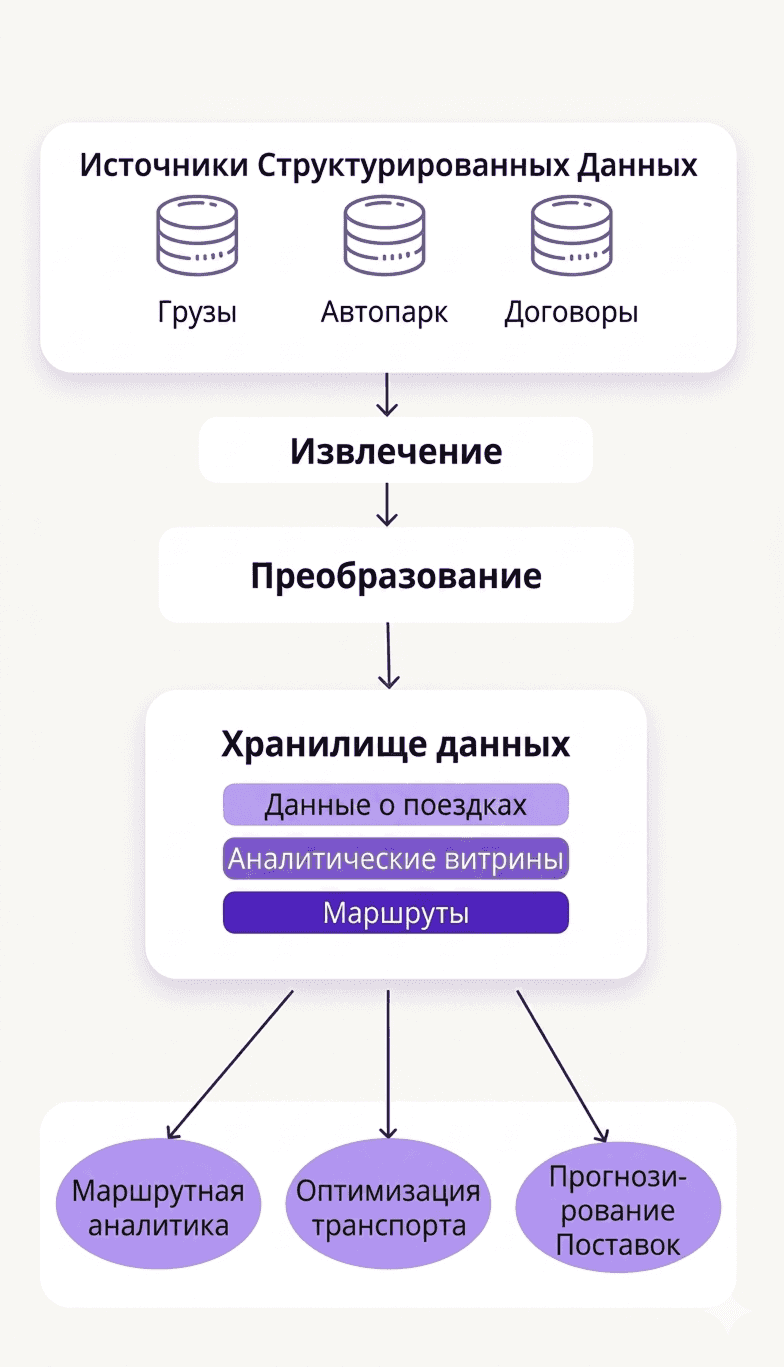
FMS (Fleet Management System) is an electronic fleet management system. Many companies mistake GPS tracking (such as "Traektoriya") for a full-fledged FMS. However, location monitoring is only 15% of the functionality. Efficient logistics processes come from data integration:
- TCO: calculating the total cost of vehicle ownership;
- predicting breakdowns from CAN bus data;
- matching fuel consumption against gas station receipts.
Custom vs. Off-the-Shelf Driver Management Software: A Comparison
| Parameter | Off-the-shelf solution | Custom solution |
|---|---|---|
| Algorithm flexibility (routing, documents) | Standard vendor algorithms and logic | Optimized for the needs of the company and its clients, with the option to deploy a local AI agent to sort emails |
| Integration with ERP, CRM | Difficult without documentation and an open API (integration is possible, but limited) | Seamless integration |
| Digital asset | Not owned by the company | Owned and capitalized by the company |
| Subscription fee | Depends on fleet size and headcount | One-time investment |
| Number of modules | Several service packages, but some features may go unused | A tailored set of modules and features |
| Server | No control over where databases are stored | Can be hosted on your own infrastructure |
CODECAVE developers recommend looking at multifunctional apps that handle not only route planning and scheduling but also document workflow automation and every process of working with clients. If you decide to build a mobile app to optimize your logistics, focus on owning the code, since that lets you maintain the app in-house.
One example of a multifunctional app is the solution CODECAVE built for Direxxt: a mobile app for managing express delivery drivers.
Developing an App for Managing Express Delivery Drivers
The team's task was to cut freight delivery costs and stop using the BelTransSputnik system by building the company's own system for route planning and delivery management, as well as to improve the quality and speed of delivery management.
The result is an ecosystem (a multifunctional application) that includes admin and client apps as well as a mobile app for drivers. This comprehensive solution not only improves efficiency and productivity but also provides a single platform for managing every aspect of client work and service delivery. The app connects all participants in the business processes and automates order creation and dispatching, which reduces the workload on logistics coordinators.
If this project interests you, see its full description.
How We Develop Mobile and Web Apps for Logistics and Express Delivery Companies
Our process is a cycle that turns business value into software code. We understand that in logistics, idle vehicles and outdated data are unacceptable. Here is how we work.
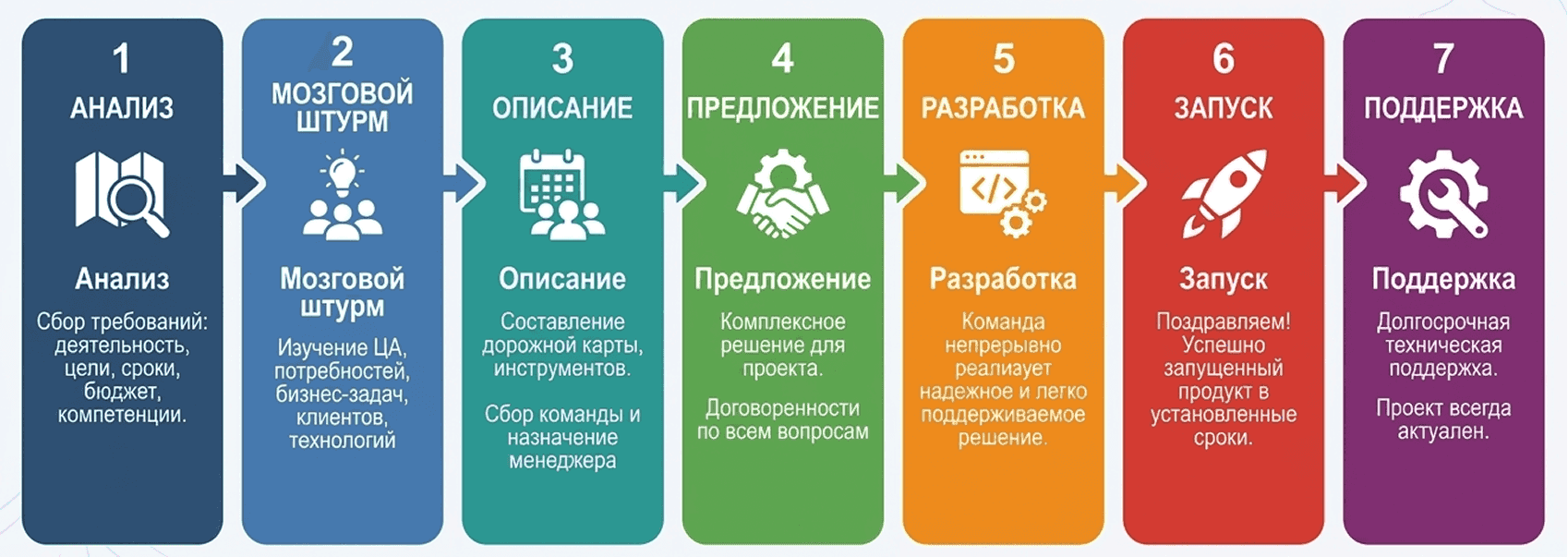
- Analysis. We start by "immersing ourselves in the domain". We find out not only the technical requirements but also the real pain points of logistics coordinators, from working in areas with poor internet coverage to the specifics of preparing consignment notes.
- Brainstorming. We design user scenarios (User Journey Map). How will a driver mark an order's status? How will an admin see a delay in real time? We choose a technology stack that fits your load.
- Specification (Roadmap). We prepare the technical specification and a roadmap. You get a transparent plan: which modules (logistics, tracking, reporting) will be ready by the first sprint.
- Proposal (commercial architecture). We present not just a "price tag" but a comprehensive architectural solution. We explain why choosing specific APIs or routing algorithms will save budget in the long run, and why this business logic will make your work more efficient.
- Development. We follow an Agile methodology. You see interim results at every stage.
- Launch. We carry out load testing and deployment. The product is ready for real-world operation, integrated with your systems (ERP/WMS) and configured for your dispatchers.
- Support. We don't say goodbye after the release: we stay in touch and provide technical support.
Our IT development process focuses on:
- scalability: the ability to add more than 100 new vehicles without rewriting the architecture;
- security: protection of cargo and route data.
We offer a free audit of your current IT infrastructure, where you'll learn how much you could potentially save by dropping subscription fees. If you only have a project idea for now, we're also ready to discuss the details and bring it to life. You can reach the team by filling in the form on our website. We'll be glad to help optimize your business processes and choose the most efficient and reliable solution!